Intermittent Fasting for Fat Loss: Does It Actually Work?
By. Ysanne Griffin
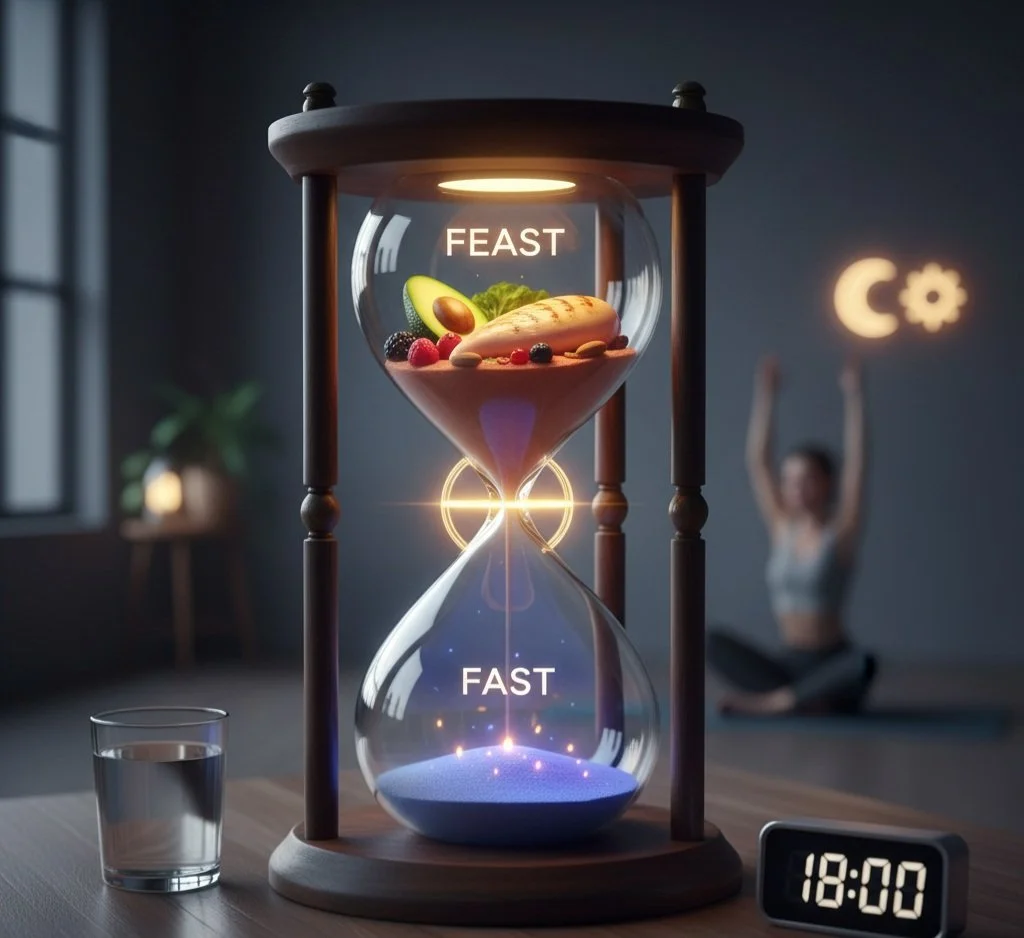
Let’s be honest, you hear about Intermittent Fasting(IF) everywhere these days. Whether it’s someone doing 16:8 or OMAD (one meal a day) fasting is marketed as the key to fat loss, mental clarity and metabolic health.
But is it really better than traditional dieting? How does it affect your body and hormones? And are there differences between how men and women respond?
In this article, we’re diving into the science behind fasting for fat loss, what works, what doesn’t and what you should watch out for.
What Exactly Is Fasting?
There are several popular styles:
Time-restricted eating (TRE): Eating within a daily window, for example, 8 hours of eating, 16 hours fasting.
Alternate-day fasting (ADF): Eating normally one day, then either fasting or severely reducing calories the next.
5:2 fasting: Eating normally five days per week, and cutting calories (typically 500–600) on two non-consecutive days.
Prolonged fasts: Going 24+ hours without food, sometimes for multiple days.
Each of these comes with different effects and different risks.
Why Fasting Can Help With Fat Loss
Let’s break down why fasting might work in your favor when it comes to losing body fat.
1. You naturally eat fewer calories
This is the most basic mechanism. If you’re only eating during an 8 hour window, you're likely to eat fewer total calories without consciously dieting. That calorie deficit is ultimately what drives fat loss, whether you're fasting or not (1).
2. It shifts your metabolism toward burning fat
Once your body burns through stored carbs (glycogen), it starts breaking down stored fat and producing ketones especially during fasts of 12+ hours. This shift is called metabolic switching and is one reason fasting is thought to boost fat burning (2).
3. Lower insulin = less fat storage
Insulin is the hormone that helps your body store energy. Fasting reduces insulin levels, which may encourage fat breakdown and reduce fat storage over time (3).
4. Cellular repair and autophagy
Fasting activates processes like autophagy (your body’s built-in recycling system that clears out damaged cells). This may support metabolic health although most of the research here is still in animals or early phase human trials (4).
What the Science Actually Says About Fat Loss
The burning question: does fasting lead to more fat loss than regular dieting?
Here's what the data shows:
Intermittent fasting protocols like ADF and 5:2 lead to 3–9% weight loss over 12–24 weeks, with most of the weight coming from fat mass (5).
A meta-analysis found that alternate-day fasting resulted in an average of 1.3 kg more fat loss than traditional calorie restriction (6).
However, other studies show no significant difference in fat loss between intermittent fasting and traditional dieting when calories are matched (7).
So the bottom line? Fasting works mostly because it helps some people eat fewer calories. It’s not a metabolic magic trick, just another tool in the fat loss toolbox.
Is Fasting Better for Men or Women?
This is where things get interesting.
Men
In men, fasting tends to lower testosterone levels modestly, especially in lean or athletic individuals. In most cases, muscle mass and strength aren’t significantly affected in the short term (8). It’s something to monitor if you’re a male training hard while fasting.
Women
Women’s hormones are more sensitive to stress including the stress of fasting. Some evidence suggests that intermittent fasting reduces androgens (like testosterone) in women with obesity, which could be a good thing in conditions like PCOS (9).
But in lean or highly active women, fasting may negatively affect menstrual cycles, ovulation, or thyroid function (10). Women may need to take a more moderate approach like 12:12 or early TRE rather than extreme fasting schedules.
The Risks of Fasting (What to Watch Out For)
Fasting isn’t for everyone. Here are the potential downsides:
Muscle loss: During long fasts, especially with inadequate protein or no resistance training, you may lose lean muscle tissue along with fat (11).
Hormonal issues: Particularly in women, prolonged or aggressive fasting can cause menstrual irregularities and hormonal imbalances (10).
Fatigue, irritability, poor focus: Not everyone thrives mentally or physically in a fasted state. Some people get moody or lightheaded, especially early on.
Disordered eating patterns: People with a history of bingeing or restriction may find fasting triggers unhealthy behaviors.
Not safe for everyone: Fasting is not recommended for:
People with eating disorders
Pregnant or breastfeeding women
Children or teens
Type 1 diabetics
Individuals on insulin or certain medications
Should You Try Fasting?
If you're healthy, have a lot of body fat to lose and are looking for a simple way to control calorie intake without counting every bite, fasting can be an option for you but it’s not a miracle fix.
What really matters:
Are you eating nutrient-dense meals during your eating window?
Are you getting enough protein to preserve muscle?
Are you resistance training?
Can you stick with it long term?
If the answer is yes and you feel good while doing it, fasting may be a helpful fat loss tool for you.
Final Thoughts
Fasting can absolutely support fat loss especially if it helps you reduce calories and stay consistent. But it’s not magic and it’s not better than other diets for everyone.
Men and women respond differently and it’s especially important for women to listen to their bodies and not push through hormonal warning signs. As always, the best fat loss plan is the one you can stick to without breaking your health.
References
Cioffi, I., Evangelista, A., Ponzo, V., Ciccone, G., Boschetti, G., Barale, S., ... & Bo, S. (2018). Intermittent versus continuous energy restriction on weight loss and metabolic outcomes: a systematic review and meta-analysis of randomized controlled trials. Journal of Translational Medicine, 16(1), 371.
Mattson, M. P., Longo, V. D., & Harvie, M. (2017). Impact of intermittent fasting on health and disease processes. Ageing Research Reviews, 39, 46–58. https://doi.org/10.1016/j.arr.2016.10.005
Patterson, R. E., & Sears, D. D. (2017). Metabolic effects of intermittent fasting. Annual Review of Nutrition, 37, 371–393. https://doi.org/10.1146/annurev-nutr-071816-064634
de Cabo, R., & Mattson, M. P. (2019). Effects of intermittent fasting on health, aging, and disease. New England Journal of Medicine, 381(26), 2541–2551. https://doi.org/10.1056/NEJMra1905136
Harris, L., Hamilton, S., Azevedo, L. B., Olajide, J., De Brún, C., Waller, G., ... & Hankey, C. (2018). Intermittent fasting interventions for treatment of overweight and obesity in adults: a systematic review and meta-analysis. JBI Database of Systematic Reviews and Implementation Reports, 16(2), 507–547. https://doi.org/10.11124/JBISRIR-2016-003248
Cho, Y., Hong, N., Kim, K. W., Cho, S. J., Lee, M., Lee, Y. H., & Lee, B. W. (2019). The effectiveness of intermittent fasting to reduce body mass index and glucose metabolism: A systematic review and meta-analysis. Journal of Clinical Medicine, 8(10), 1645. https://doi.org/10.3390/jcm8101645
Headland, M., Clifton, P. M., Carter, S., Keogh, J. B. (2016). Weight-loss outcomes: a systematic review and meta-analysis of intermittent energy restriction trials lasting a minimum of 6 months. Nutrients, 8(6), 354. https://doi.org/10.3390/nu8060354
Tinsley, G. M., & La Bounty, P. M. (2015). Effects of intermittent fasting on body composition and clinical health markers in humans. Nutrition Reviews, 73(10), 661–674. https://doi.org/10.1093/nutrit/nuv041
9. Zumpano, M. P. (2022). Intermittent fasting: Effects on female reproductive health. Cleveland Clinic Journal of Medicine, 89(5), 275–282.
10. Harris, L., Hamilton, S., Azevedo, L. B., Olajide, J., De Brún, C., Waller, G., ... & Hankey, C. (2018). Intermittent fasting interventions for treatment of overweight and obesity in adults: A systematic review and meta-analysis. JBI Database of Systematic Reviews and Implementation Reports, 16(2), 507–547. https://doi.org/10.11124/JBISRIR-2016-003248
11. Ganson, K. T., & Smolak, L. (2020). Intermittent fasting and disordered eating behaviors in adolescents and young adults. Eating Behaviors, 37, 101369. https://doi.org/10.1016/j.eatbeh.2020.101369
